For years, I thought my job as a trainer and coach was to change teams.
Then a pharma conference taught me I was wrong.
I was speaking at an internal event for a large pharma company. Two hundred people in the room: product managers, delivery leads, engineers, a scattering of senior leaders. My slot was lean experimentation. How small, safe-to-fail experiments bridge product and delivery. How learning happens through both success and failure. How the teams that thrive are the ones where people can say “that didn’t work, here’s what we learned” without anyone’s career ending.
It had gone well. Good questions. People stayed behind during the coffee break to discuss how they’d apply it. You can feel it when a room is leaning in.
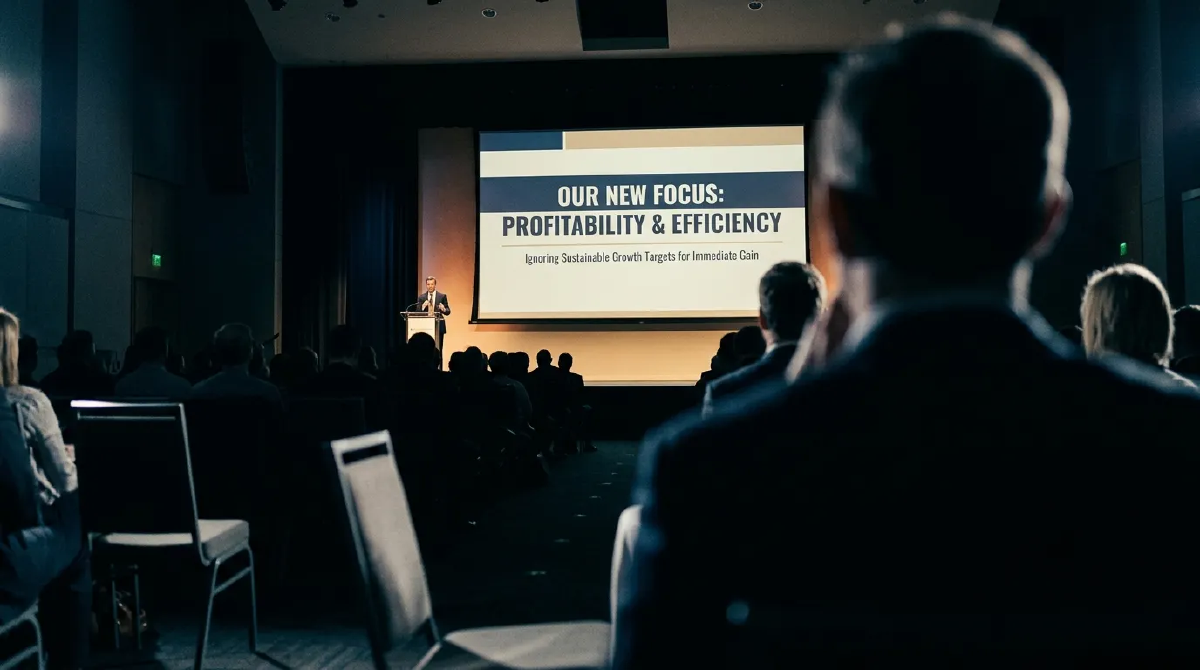
Then the head of Product took the stage to talk about building a 12-month roadmap. Halfway through, his slide went up:
“We want innovation, but we will not tolerate failure.”
I was dying quietly in the audience.
Because in one sentence, he’d just untrained everyone. And he had no idea he’d done it.
The Untraining Moment#
Here’s what I’ve come to call that instant: The Untraining Moment.
It’s the specific moment when a leader, usually without realising it, cancels out what their team was just taught. Sometimes it’s a slide. Sometimes it’s a passing comment in a roadmap review. Sometimes it’s who gets promoted, or who gets quietly sidelined after a project didn’t land.
The training ends. The Untraining begins. And the Untraining always wins, because the leader is the louder signal in the room — every day, in every meeting, in every decision. A trainer speaks to a team for a day. A leader speaks to them for the next twelve months.
This is the thing I had to learn the hard way: leaders don’t sponsor training. They ARE training, continuously, whether they know it or not.
Every reward is a lesson. Every punishment is a lesson. Every slide, every aside, every eye-roll at the word “experiment” is a lesson. Your team is always being trained. The only question is by whom.
What the pharma room actually learned#
Watch what happens in real time when “we will not tolerate failure” lands in a room that’s just spent the morning being taught to experiment.
The product managers do the maths. If failure isn’t tolerated, you don’t run experiments, you run launches. You don’t validate with customers but build business cases that get approved. You don’t kill features, you polish them until they look inevitable. The job stops being “find what’s true” and becomes “defend what’s committed.”
The delivery leads do a different calculation. If failure isn’t tolerated upstream, everything that reaches them is non-negotiable. Flow, right-sizing, WIP limits; those are luxuries you earn when leadership is prepared to hear that something’s going to take longer, or isn’t worth doing at all. They’d just been told it isn’t, so the backlog stays stuffed, the deadlines stay fixed, and the team burns out shipping stuff nobody validated.
The engineers do the oldest calculation in the book. Keep their heads down. Don’t volunteer anything risky. Don’t say the roadmap is fiction, even when they know it is.
Everything I’d taught that morning required one thing: safety to say “this didn’t work.” The head of Product had just removed it in thirty seconds.
He wasn’t a fool. He thought he was being decisive. He thought “we will not tolerate failure” was leadership, a high standard, a commitment to quality, and a reassurance to his own bosses that the roadmap would land. If you’d asked him whether he supported experimentation and learning, he’d have said yes, of course. He’d probably have said he loved the morning’s talk, but I never asked.
That’s the thing about Untraining. Leaders almost never know they’re doing it.
Why this breaks product AND delivery#
What makes the Untraining Moment especially brutal is that it doesn’t just undo one team’s training. It triggers a schism between them.
Train product to think in outcomes whilst delivery is still measured on output, and you haven’t built friction, you’ve drawn a border. Two tribes, same company, opposing scoreboards. Product wants to pause and learn. Delivery needs to ship to hit their numbers. Stand-ups become negotiations. Retros become hostage exchanges.
Train delivery to manage flow whilst product keeps stuffing the pipeline with unvalidated bets, and you’ve built a beautifully efficient machine for shipping the wrong things faster. The team doesn’t break. It just stops caring whether the work was worth doing.
And if you train both tribes to experiment, learn, and fail safely — then stand up and say “we will not tolerate failure”, you’ve just told them their new shared language is career-limiting. The Untraining Moment doesn’t just cost you the training. It costs you the truce.
This is why I always insist on training product and delivery together now. Not because it’s tidier, but because when the Untraining Moment lands, both tribes need to recognise it. Otherwise, each of them thinks the other one broke the peace.
How to spot your own Untraining Moments#
The uncomfortable work for leaders isn’t sponsoring training. It’s noticing when you’re undoing it.
Watch for:
- The “but” after the encouragement. “I love that we’re experimenting, but make sure it doesn’t delay the launch.” The team only hears what comes after the but.
- The hero you just promoted. Did they get there by delivering outcomes and learning from failures? Or by shipping on time and never admitting the bits that didn’t work? Every promotion is a syllabus.
- The meeting tone-shift. When a team says “we tried that, and it didn’t work”, does the room lean in with curiosity or move on faster? Your face is a slide.
- The word “innovation” on the same page as “no failure.” If you’ve ever put this on a slide, in a town hall, or in a performance review, you’ve had an Untraining Moment. You just haven’t had anyone brave enough to point it out.
- The silence after bad news. If no one brings you bad news early, it’s not because there isn’t any. Silence is a curriculum, and yours is being taught daily.
- None of these are dramatic, and that’s what makes them dangerous. The Untraining Moment is almost never a speech. It’s a look, a slide, a promotion, a joke, a silence. Small signals, repeated daily, louder than any trainer.
Your move#
If you’re commissioning training for your product and delivery teams, the most useful thing you can do isn’t to pick the right trainer, but to audit yourself for Untraining Moments before, during, and especially after the training lands.
Three questions to sit with:
- What does a good failure look like in this organisation? If you can’t answer, your team can’t either, which means every failure is about to be a bad one.
- Where do we actively make it safe to say “we were wrong”? Not “where do we tolerate it.” Where do we make it safe. If the answer is “nowhere really,” psychological safety for everything else falls with it.
- Are product and delivery measured on the same things, or on opposing things? If product is on outcomes and delivery is on throughput, you don’t have a product-and-delivery organisation. You have two tribes in a cold war, and no amount of training will end it. My advice is to read your own slides the morning after training ends. Read them as someone who spent that day being taught to experiment, to learn, to bring two tribes together around the truth rather than the plan.
Ask yourself if anything you’re about to say would make that person give up.
Because if it would, you’re not leading innovation, you’re leading the Untraining.